Start with the task
Define the audience, source material, and format before asking Claude for a draft. Use the same approach for client emails or research briefs.
Suppose you ask Claude to summarise a client meeting. You get a readable paragraph, but you still have to work out who promised what, which deadlines were agreed, and what to ask the client next. The Claude Playbook teaches you how to ask for the deliverable you actually need: a list of decisions, an action table with owners and deadlines, and a follow-up email that flags the open questions.
Digital PDF · 299 Pages · 10 Chapters · 50 Templates · Instant PDF Download · Powered by SuperProfile
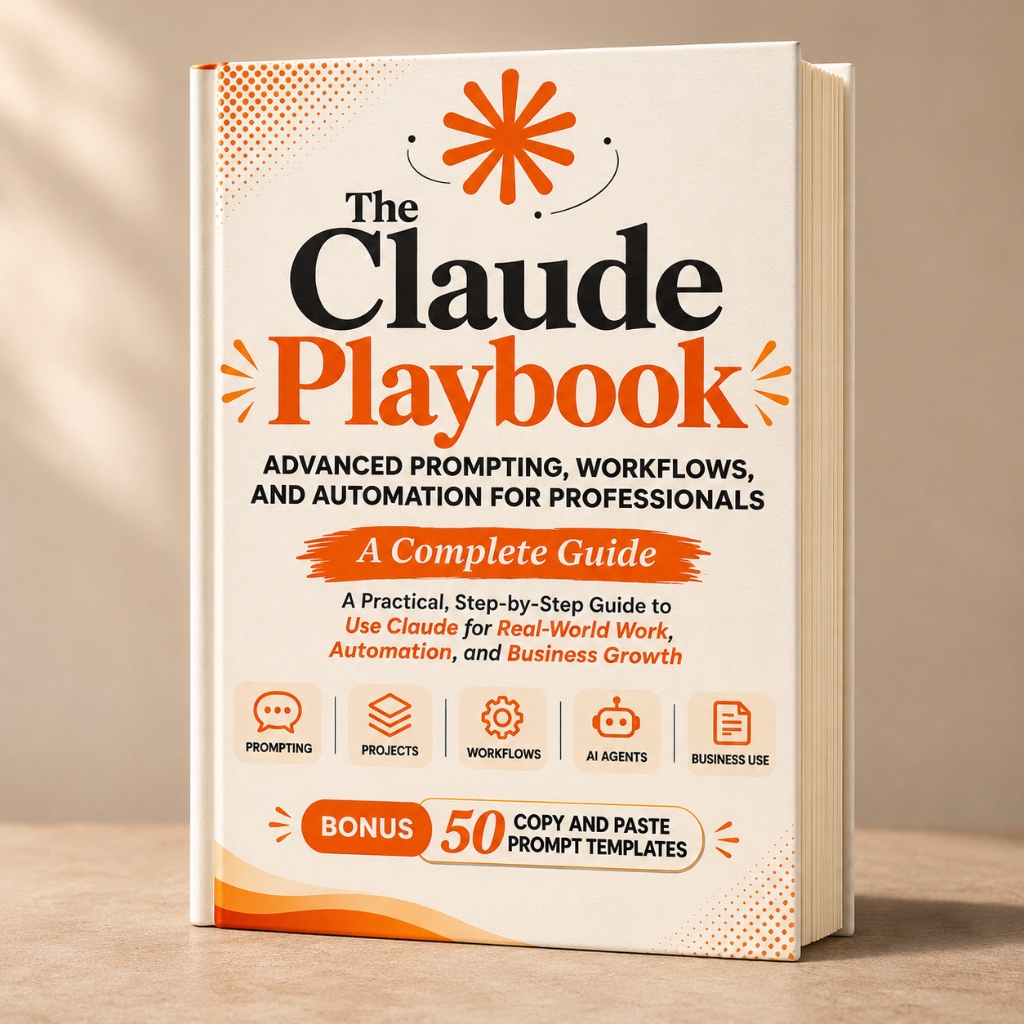
Across 299 pages and 10 chapters, this practical ebook takes you from writing your first structured prompt to using Claude for research, document analysis, client work, and everyday business operations. You’ll learn how to give Claude the right background, show it what a good result looks like, and check its answer against your source material. Later chapters cover Projects, Skills, connectors, and AI agents, along with the privacy and accuracy questions to consider before using them at work.
The book includes 50 copy-and-paste prompt templates organised by professional role and a one-page visual prompt cheat sheet. You can read the chapters in order or go straight to a template when you have a task to finish.
Built for immediate application. From your very first assignment to repeatable team workflows.
The template index lets you go directly to a proposal, research brief, meeting summary, or content plan. Replace the placeholders with your details and use the first draft to see what still needs work.
The seven-part prompting framework helps you identify what was missing from your request. A generic sales email, for example, might need a clearer audience, a specific offer, or a sample of your writing.
Learn to organise project instructions, preferred formats, and reference materials so your next assignment can start from an established brief.
Learn to distinguish facts supported by your documents from assumptions that need checking before you send work to a client or colleague.
Beginners can start with the foundations, experienced users can jump to automation, and freelancers can follow the 90-day plan to practise and shape a service.
The visual cheat sheet gives you a compact reminder of the prompt formula and techniques while you work.
See how professionals across 10 different disciplines use The Claude Playbook to save hours and produce higher quality outputs.
Evaluate a business idea, identify assumptions, and plan a small test before committing time or money.
Turn a client enquiry into a proposal with deliverables, scope, and questions to resolve before quoting.
Use a campaign brief to draft messages for different audiences while keeping the offer consistent.
Turn one article into a newsletter and several social posts that retain the original facts and voice.
Convert meeting notes into decisions, responsibilities, deadlines, and a follow-up your team can act on.
Turn a recurring task into a documented procedure, then identify steps that could be automated.
Ask Claude to explain unfamiliar code, suggest test cases, or draft documentation for review.
Compare findings across documents, trace claims to their sources, and identify where evidence is missing.
Build a lesson outline, prepare practice questions, or organise a study plan around a learning goal.
Draft role-specific interview questions, onboarding plans, and employee communications for human review.
A complete chapter-by-chapter walkthrough from prompt anatomy to advanced automation, custom Skills, and business adoption.
Discover why a clear question can still produce a vague answer. Learn to spot missing context and give Claude the details it needs to respond to your specific task.
Use a seven-part framework to write better prompts. Define the task, audience, constraints, and output format so Claude knows what a useful answer looks like.
Set up project instructions, reference files, and writing preferences in one place. When the next assignment arrives, Claude can work from the brief you’ve already prepared.
Guide Claude through complex assignments in stages. Start with an outline, review its assumptions, and refine the draft against criteria you choose.
Compare proposals, extract findings from reports, and ask questions about your files. Learn to trace each answer back to its source and spot gaps in the evidence.
Turn meeting notes into action items with owners and deadlines, or turn research into a decision brief. Adapt these workflows for assignments you handle every week.
Explore how Skills package repeatable instructions, connectors bring in information, and agents carry out multi-step tasks. Decide where each tool fits and when a person should review the result.
Build a review routine for AI-assisted work. Check claims, decide what information is appropriate to share, and set standards your team can follow.
Follow a structured plan to practise on real assignments, build a portfolio, and shape a service around a customer need. Work toward pitching your first paid project.
Apply Claude to customer communication, marketing, planning, and daily operations. Start with a recurring business task and turn it into a process your team can reuse.
Define the audience, source material, and format before asking Claude for a draft. Use the same approach for client emails or research briefs.
Compare proposals, extract decisions from meeting notes, and verify source evidence before sharing outputs.
Leverage Projects, Skills, connectors, and reusable prompt templates for recurring business tasks.